Tuesday, May 11, 2010

Learn dance

There is much confusion amongst the general public about how you can learn to dance. It seems that everyone wants to learn to dance. How many people when you ask them the things that they would like to learn one day mention dancing? From my experience pretty much everyone. But how many people go through the effort to learn?

There is a myth out there that all dancers were born with the gift of dancing. My take on that is this: all dancers were born with the gift of dancing, and we were all given that gift! There are those who seemed to just drop out of their mother's womb dancing. However don't let the tears well up if this is not you, there is a dancer in everyone and it is something that can be unearthed.

The baby dancing on arrival in the world is a good analogy. A baby probably won't be able to talk for the first few years of its life. Then the words come out one by one, then sentences, and then absurdities on arrival of the teenage years. If I told you that I knew a 5 year old who could talk, would your face transform into an expression of surprise? (I'm hoping you answered 'no').

You give a baby as long as it needs to learn to talk or walk because you know that it will learn. With dancing it is just the same, it may seem unnatural at first, but with a bit of practice you can dance pretty well. And it won't take you as long as it took you to learn to talk!

The transition from walking and moving about normally into dancing is not as huge as it is made up to be. It is a case of making certain simple movements gestures, linking them up in interesting ways and making it look good! Of course when it comes to learning routines and choreography, that's another skill in and of itself!

So what's the answer to the golden question? How do you learn to dance? Well there are many ways. You could learn by copying your favourite artists such as Janet Jackson, Usher or J.Lo and studying their music videos. In fact, this is the way famous MTV choreographer Wade Robson learnt to dance. If you are naturally a good dancer, this could be a good approach.

Another way you could learn is to make friends with people who are good dancers and either copy them or try and get them to show you how to do a few of their moves. This is great, especially if you spend a lot of time with these friends.

The easiest way you can learn to dance is to join a dance class. There will usually be at least a couple of these in your area, maybe even a dance studio offering a variety of different classes from different teachers. If you are not naturally a dancer, joining a dance class or series of classes is probably the best option for you. Even if you can dance and learnt on your own, there are still plenty of things you can learn from joining a dance class. If you are at all serious about dancing as a profession, you should DEFINITELY be going to classes unless you are privileged enough to be the son/ daughter of a talented dancer or have lots of great contacts/ dancer friends.

Tango dance

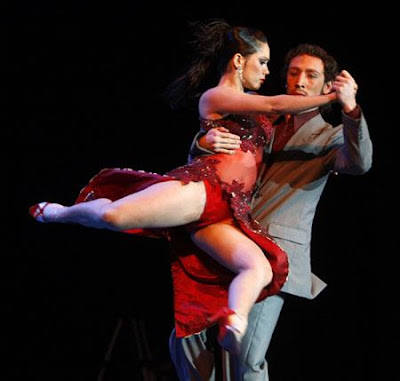
In the brothels and slums of nineteenth century Buenos Aires, a fusion of Spanish, Uruguayan, and African dance and music styles created the tango, the famous and sensual dance of Argentina.

It was a social dance, based heavily on improvisation and formed around close, almost intimate interaction; the communication between partners must be impeccable, because the dance has no set patterns and no “basic step” from which to build. However, it was not necessarily a sensual or sexual expression; there were men-only tango clubs.

European immigrant communities in Argentina in the 1890s picked up on the music, which was initially just one of many styles that went by the name “tango.” It swiftly became the fad of the underclass, who danced in crowded halls, leading to a close-contact and casual dance style. The tango music became the most popular in Argentina, comprising more than a third of all the gramophone records and sheet music sold between 1902 and 1920.

By 1912, the music and dance had begun to spread from the barrios to the middle-class and even upper-class dancing establishments and nightclubs across Argentina. From there the craze spread swiftly to Paris, London, and Berlin, where they were danced with less intimate contact between the partners. In Finland, the dance found a new home and expression, played in minor keys and performed in flowing, horizontal patterns, now known as Finnish Tango; it grew to the height of its popularity in the 1950s. In English Tango the dance evolved into a competitive ballroom style, heavily structured and with strict codes that introduce a more staccato movement not seen in Argentina, as well as the head-snap movement often seen in film. New York tango performers modified the dance to a wider embrace as well.

Meanwhile in Argentina, the dance became heavily associated with Carlos Gardel's Mi Noche Triste, a song of tragic love. The music in the 1920s was taken up by classical musicians who gave it a more complex and elegant flavor, and slowed the tempo. Then it fell out of favor during the 1930s and 1940s, only to revive again along with the nationalist fervor of Argentina's PerĂ³n years. Rock and Roll music, along with economic struggles in Argentina, dealt it another blow, and it steadily declined in popularity until finally enjoying a resurgence in the 1980s.

In the 1990s, the emergence of electronic and world music gave the tango a new twist. Combining jazz elements with popular music from artists such as Gotan Project, Tom Waits, and Portishead, Tango Neuvo has appealed to an entirely new generation of dancers. This style was the result of a structured analysis of the physics and kinesiology of tango, which emphasized the axis of turn and directional changes. Practitioners of this style, as well as the more traditional forms, have brought the dance from Argentina to new dance hubs such as San Francisco and Chicago. Today in Buenos Aires, there are dance competitions that host Argentine Tango performers from all over the world.

Belly dancing classes

No matter what diet you follow, rather you sweat it out on a treadmill, in a spin class or sweatin’ the oldies, one indelible truth remains: to get in shape and stay that way you must exercise. No matter what pill claims research and science to stop carb absorption, block fat hormones or decrease hunger, the fine print is always the same: “use in conjunction with a sensible diet and exercise”.

The problem with that is most people hate to exercise. And the majority of those who do it consistently have simply submitted to the inescapable obligation to do so.

The quest now is how to make exercise enjoyable .. . dag on it, make it fun even. The best way to do that is to do something you enjoy. Something different., something that challenges your muscles, gets your blood pumping, and your laugh lines stuck. And if it makes you feel confident and sexy at the same time, it won’t hurt none. Belly dancing is just the activity that will give you all those benefits and some more to boot.

The History of Belly Dancing

Belly dancing is often looked at as the secret dance of the bronze skin beauties. But in fact this is a secret that has been revealed. Belly dancing has been done since ancient times. Some for of it exist in many countries around the world from the Middle East to East Asia, its performance in entrenched in culture and tradition.

Although belly dancing is viewed in western societies as a sexually exotic dance done by women for men, that’s not the traditional view or practice of belly dancing. As a dance that is performed in societies where women and men have socially separate interaction (ie women over here, men over there), it is a dance that is most commonly done for women by women. In ancient Egypt, when the mistress went in labor, her harem would gather around her and do undulations of the belly, also known as belly rolls, to symbolize the birthing process, and distract her from labor pains.

During bridal parties when the bride had her hands and feet covered in Henna (a mud-like paste to dye decoration on the skin) the women would belly dancing to pass the time while the henna dried.

Interestingly enough men belly dance as well. With firm, earthly moves that often includes stomps and sharp movements, instead of the graceful flows of the female version, men celebrate among them selves.

The uniqueness of belly dancing

Belly dancing is a type of dancing whose base is isolation moves. You must move your torso while keeping your lower body still and visa versa. For most people in western society it is a muscle challenge because we are not use to using our muscles in the way belly dancing requires. So even the women with a six pack can benefit from the unique muscle techniques required to belly dance. The muscle control and technique required while implementing the very deliberate moves (yeah it’s so much more than just trusting your pelvic bone around), will make you admire the graceful moves displayed by belly dancing performers. Even if you do not plan on gracing the stage to move your “lovely lady lumps”, it is an activity every woman should try at least once in a life time.

We are westerners and in our mind belly dancing is still exotic and sensual and to be able to move with grace and sensuality makes us all little more confident in our femininity. And because it is a dance that can be done no matter what shape, size or scale number you represent, it is just the thing to help you love the skin you are in.

Cuban salsa

Dance has been an important part of rituals, celebrations and entertainment since before the birth of human civilization. In the beginning, before we had written language to record things, the purpose of dance was often to tell stories and to pass them down to future generations.

The story of dancing in Cuba

In Cuba, as in ancient times, dance tells its own story. The passion and energy of Cuban dance reveals the strength and conviction of the Cuban people, determined to enjoy life despite ‘la lucha’ (the struggle) of living in a strictly regulated country where the average monthly wage comes in at around 400 pesos – less than £10.

The richness of Cuban music and dancing also tells the story of Cuba’s melting pot of cultures. From the high-stepping flamenco brought by the Spanish settlers in the 15th century to the frenzied tribal dances of the West African slaves, dancing is in the blood of the Cuban people.

From the teenage girl in denim shorts to the cigar-seller on the street corner, Cubans are given to break into spontaneous dance steps. Furthermore, the people dancing on the streets of Havana are likely to be just as good as the professionals, because in Cuba dancing is simply a way of life.

The variety of Cuban dances

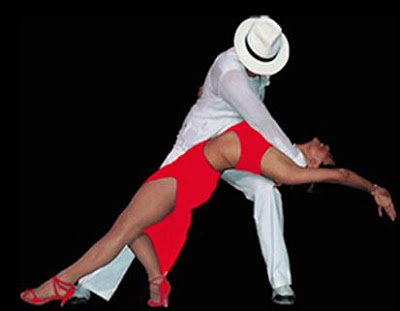
Cuba boasts a huge range of dances including classical ballet, contemporary, flamenco and folk dancing. But it is the partnered routines that appeared in Havana dancehalls between the 1920s and the 1950s - Salsa, rumba, mambo and cha-cha-cha - that can be seen in every Cuban bar, club and street. Of these, Salsa is the most popular dance internationally.

Since the name ‘Salsa’ (it’s Spanish for ‘sauce’) was coined, Salsa dancing has exploded in popularity in Latin America and across the world. Salsa dancing classes are now hugely popular but to really get into the swing of it a Salsa holiday in Cuba itself is a must.

Tips for Cuban Salsa dancing

If you do take yourself on a Cuban holiday, you’ll have the unique experience of watching Cubans Salsa dancing. It sometimes appears that by some genetic aberration they have been born with super flexible joints, defying physics to carry out all the complex manoeuvres they have integrated into the dancing. Their remarkable twisting body movements and natural sense of rhythm will dazzle you.

If you have the right technique, Cuban Salsa is easier to learn than many other forms of dance. The basic footwork is a fairly simple walking motion, pausing every fourth beat, and there are some six basic steps you can follow to make sure you’re on the right tracks.

1 Relax

To dance Cuban Salsa well it is important not to rush, but to relax into the steps. Movements should be precise and deliberate in addition to being flowing and smooth.

2 Walk with purpose

Salsa dancing involves a continual circular motion. Couples walk around each other with an imaginary axis between them. This makes turns look smooth and effortless. Walking gives time to untangle your arms after each turn.

3 Have confidence in your lead

The leader (usually the man) should have constant tension in his arms, while his hands guide his Salsa dancing partner around the floor. There is no need to clamp onto each other’s hands, only to use the right amount of tension to provide a leading signal.

Wedding dance lessons

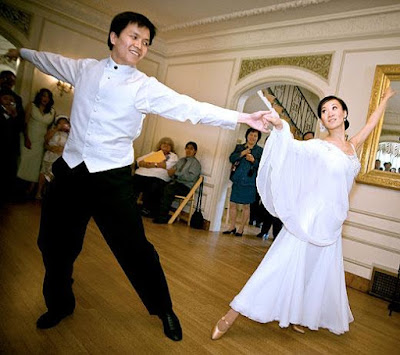
First dance reminds us all of the pledge that having a lifetime partner holds and recalls our thoughts of romance and eternalness. For sure, it can also be a basis of strain for the couple involved if they have not spent any time preparing beforehand. Partner dancing is a talent like any other and with a minimum of practice and homework, any couple can take the spotlight with confidence and elegance on their big day.

You should be able to come across teachers who have experience with wedding couples at your local ballroom dance studio. When you call, ask if that studio has any special wedding packages available. Most ballrooms offer both group classes and private lessons. Group classes are surely more affordable, but a private lesson will focus only on what you want to learn and go at whatsoever pace is best for you. You should suppose to pay anywhere from per hour for a couple for a private lesson, and each for a group class.

If you have problem finding a teacher that you like, or if time and money are considerations, you may want to try learning to dance from an instructional videotape. There are numerous videos that cater specially to wedding couples and their special desires. This will allow you to learn at any time and in the privacy of your home, which is perfect if either of you are nervous about learning to dance. Various people come across that they feel under pressure with the constant attention of an instructor in a private lesson, and they are too shy or self-conscious to learn in a group.

There are numerous videos that cater specially to wedding couples and their special desires.

How will your first dance commence and end?

Your bandleader or DJ can call you out to the dance floor and announce your first dance. Usually the father of the bride will ultimately cut in and dance with his daughter (this may be done to a new song or during the original song), at which point the groom may ask the bride's mother to dance. Subsequently the groom's father may dance with the bride, at which time the bride's father may cut in on his wife and the groom. The groom may then ask his mother to dance. Furthermore the groom may dance with the maid of honor and the bride with the best man, whereas the in laws dance with each other. At last the entire wedding party, and then the guests may join in the dancing. As the wedding couple you must come to a decision before the ceremony which part of this traditional order you would like to follow, if any. This is only a guide and it is your choice who to involve in the dancing.

It is essential to notify the individuals that you want to participate, and instruct them as to when they should join the dance, and with whom they should dance. Depending on how many people will eventually be dancing, you may have to select an additional song or songs for everybody to dance to.

Your First Dance should be one of the many beautiful memories of your wedding day. By preparing in advance you will be able to relax and have fun with each other, enjoying your moment. Don't think of this as a performance but as a ritual, part of the vows and promises that you will swap on this special day.

Salsa dancing

Salsa dancing is likely a term that you have heard and you may be wondering what it is. This type of dancing comes from Puerto Rico and Cuba. It is believed that it was brought to other destinations from migrants that traveled around for work. Many people take an interest in salsa dancing after seeing it performed when they visit those countries where it came from.

It is important to note that there are many variations though of salsa dances. Those are usually geographical in nature so you will find that of interest when you go to a new area and see people engaging in salsa dancing. Keep in mind though that there is plenty of freedom with this type of dance so you don’t have to feel out of place if you have moves that are different than those you see around you.

There are some basic moves involved though that you will want to become familiar with. There is a four beat measure that you need to be able to identify within the music. Basically you will be moving for three of the beats and then still for one of them which gives it a very dramatic effect. The weight of your body has to be shifted with the beats too so you will have to take time to learn how this is done. Observing others doing it is a great way to see what I am talking about as well.

What is fascinating about salsa dancing is that the entire body is involved in it. The arms and the legs take on many forms throughout the music. The hips and buttocks are moving as well so it is a great way to get your entire body to relax and to relieve built up tension. Salsa dancing is extremely popular in the society of New York City so if you go there be ready to go out and have some great fun meeting people and dancing the night away.

This type of dancing seems to go through trends of popularity though in our various cultures. Some people think that salsa dancing is fairly new but it has been around since the 1950’s. There have been quite a few variations of it since that time. Generally the salsa is a dance that two people do together. However, there are some variations of it that involve solo dancing or exchanging partners during the dance.

Don’t be intimidated by salsa dancing as it may look complex at first but it really isn’t. Many of the moves are quite repetitive after you have learned the basics of it. The key is to have a good time with it and not to focus on being perfect with off of your moves. The style you have will get better the more you dance.

A word of warning though – salsa dancing is going to give you quite a workout! You don’t want to just show up at a club and think you can do them if you aren’t in good shape. You need to practice at home so you can do the moves for a long time without getting tired or working up a sweat. In fact, salsa dancing is a great way to burn calories and get into shape while you are having a great time.

Dance instruction

Everybody thinks the same thing. Everyone thinks that they've seen it all and they know it all already. Well there is a substantial chance that these people are right and that they have seen it all. However, dance instruction should be something that you shop for and something that you

should take seriously if you really want to make a career (or serious hobby) out of dance. Let's take a look at 2 easy ways to shop for dance instruction lessons and dance instruction professionals using the power of the internet.

1)Go local. A lot of the search engines are now putting special attention on local results. Many people are looking to buy something close to Just because it's the world wide web, it doesn't mean that you can't boil the web down into some very manageable parts. If you live in San Francisco, you can make sure that you only receive the results that are local for you by searching for 'dance instruction San Francisco.' Furthermore, Yahoo has an incredibly useful yellow pages

section where you can find all sorts of local information relevant to your information quest. Google even has gone so far as to offer a text messaging service where you can enter 'dance instruction 77002” (keyword or service and zip code) and Google will send a text message to your mobile device with the information you are looking for.

2)Look for independent reviews. A lot of different websites have independent reviews of different services which you can find. Dance instruction is no different. Citysearch can be a great place to find such reviews. If you search for dance instruction in Los Angeles there will undoubtedly be plenty of dance studios and dance instructors listed on Citysearch. Some will have reviews of current an past customers who were either satisfied or dissatisfied with their

experience of the different dance studios. Reading up on these somewhat independent reviews can be a great way to find out what people think of dance studios.